
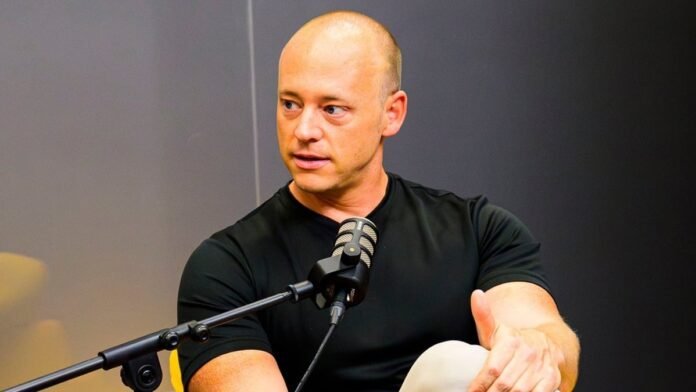
College football analyst Josh Pate is offering new insight into how his recent sit-down with Donald Trump unfolded, revealing that the most substantive parts of the experience may have occurred after the cameras stopped rolling.
Speaking on the Macrodosing podcast, Pate detailed how he set clear expectations with White House communications staff before the interview ever took place, making it known that his platform centers on college football rather than partisan debate and that he had no interest in turning the conversation toward foreign policy flashpoints or economic strategy.
“I kind of told the White House communications folks,” Pate said. “I said, my show is not one where we’re going to get political. We’re not discussing strategy on Iran, we’re not talking the economy. There’s a lot going on in college football, if we want to go down that road. Yeah, I’m open to it. So they said, that’s all agreeable.”
That understanding shaped his preparation, as Pate built his rundown around NIL legislation, conference realignment and the broader impact federal decisions can have on college athletics. Topics that increasingly blur the line between sports governance and public policy while remaining rooted in his core audience’s interests.
However, the structure he envisioned changed dramatically once he arrived.
Pate said he initially believed he would have between 35 and 45 minutes with the former president, only to learn shortly before taping that the window had shrunk to roughly 10 to 12 minutes, forcing him to recalibrate his approach in real time while weighing the risk of asking layered questions that could consume most of the available time in a single response.
“I go in there thinking we’re about to get 40 minutes with him,” Pate said. “Then all of a sudden it becomes 10 minutes. 10-12 minutes. If you’ve ever watched the President talk, it can go really long winded. … If I know I’ve got 10 minutes here, do I run the risk of asking a really in depth question that he just goes eight minutes on an answer. You didn’t even have an interview at that point.”
Ultimately, Pate said the finished product did not align with the conversation he envisioned during preparation.
“We got like five questions in,” he said. “It didn’t really dive too deep. There wasn’t a ton of meat on the bone. … Suffice it to say it didn’t go the way that I thought it was going to go. Not necessarily anyone’s fault or anything like that. If I knew we were only going to get 10, as opposed to going in thinking 35-45 that’s a whole different ballgame.”
Even so, Pate described the off-camera moments as unexpectedly revealing, noting that while crews adjusted lighting and finalized camera angles, he and Trump engaged in a more relaxed exchange that felt less like a formal interview and more like a candid conversation between acquaintances.
“I think the conversation with him off camera was probably more substantive than the interview that we had on camera,” Pate said. “He was really open. … It’s just me and him at a lunch table, basically talking like it’s your buddy on a Tuesday afternoon.”
The appearance by President Trump sparked debate across sports media and social media platforms, where some fans questioned whether a college football-focused show should host a political figure. Pate addressed that criticism last month head-on, defending both the independence of his platform and the broader editorial direction of the program.
Barrett Media produces daily content on the music, news, and sports media industries. Sign up for our newsletters to stay updated and get the latest information right in your inbox.

