
The most difficult thing in life is embracing change. You never truly prepare for it, and as we age, we often dismiss the new as never better than what once was. Sports radio is no different. With time, things evolve. People evolve, and expectations of products evolve.
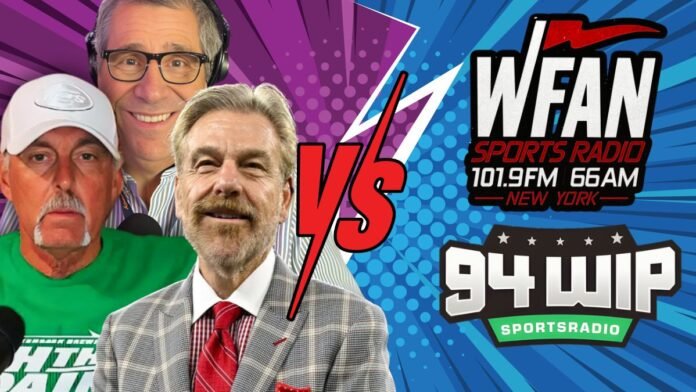
Last week offered two reminders of how easy it is to romanticize the past. As we age, we tend to remember what was instead of embracing the present and looking ahead to what’s coming. WFAN’s Joe Benigno and WIP’s Howard Eskin and Angelo Cataldi used digital programs on YouTube to dismiss what their former sports radio homes have become. Benigno said WFAN will “never be what it once was,” while Eskin and Cataldi shared their disappointment in the current direction of their former radio station.
The irony is that both brands those legends criticized remain two of the healthiest in the sports radio industry today. They continue to post strong ratings, generate significant revenue, and expand their digital footprints in modern sports media. There’s no question that sports radio, as an industry, must do a better job telling the story of the audience it still holds. At the same time, former sports radio legends should also do a better job elevating their former homes instead of attempting to bury them.
I’m not naive enough to believe every sports radio legend gets a proper exit. The business has always been cutthroat, and few leave exactly the way they hoped. I can empathize the feelings that come with being cut or removed for any reason outside of your own control. The industry also has flaws, like any other, while it continues trying to position itself for an evolving audience.
When I was let go in November of 2024, my first comments centered around the slogan “support local.” It was my attempt to explain to my audience that without their support, local voices will likely disappear. There wasn’t bad blood or negative feelings about the station itself. The message was simply to continue supporting those who remained.
Every time I’ve spoken publicly about the station — both here and on social media — my goal has been to elevate and support the local sports radio voices in the community that I once called teammates.
I don’t have the devoted following that Joe Benigno, Angelo Cataldi, or Howard Eskin have, and I never will. But shouldn’t they be sharing that same message instead of blasting the station that once paid their bills and helped raise their profiles?
Retired legends should always be the biggest cheerleaders for the next generation.
That doesn’t mean they have to love every programming decision or every voice that replaces them. No industry veteran is going to agree with every direction their former employer takes after they’re gone. That’s unrealistic. But there’s a difference between constructive criticism and publicly declaring that a brand’s best days are behind it.
When people like Joe Benigno, Angelo Cataldi, and Howard Eskin say those things, they aren’t just sharing an opinion. They’re shaping perception. These are voices that helped build the credibility of WFAN and WIP over decades.
Listeners trust them. Younger hosts grew up listening to them, and respect them. When legends frame the present as inferior to the past, it doesn’t just criticize programming decisions — it undermines the very brands that helped make their own careers possible.
More importantly, it dismisses the people currently trying to carry the torch.
“The Phillies would lose a big playoff game and the next day the host would talk about how nobly they fought. That’s not the Philadelphia I was in. When you don’t win here, you should pay a price,” said Cataldi.
Could it be that the audience wants something different than it once did? Maybe an older audience desires what Philadelphia sports radio used to provide, but a younger audience may not.
How about instead of dismissing, more legends of the industry should be embracing.
Maybe they forget that every generation of sports radio has faced the same skepticism. When the loud, opinionated format exploded in the late 1980s and early 1990s, traditional broadcasters said it wasn’t “real radio.”
When debate-driven shows became dominant in the 2000s, some veterans complained the format had lost its substance. When digital platforms began taking a larger role over the past decade, critics declared the entire industry to be on life support.
Yet WFAN is still here. 94 WIP is still here. The format is still here and continues to make an impact.
The voices may change. The platforms may change. Audience expectations certainly change. But the appetite for passionate sports conversation — the foundation of sports radio — hasn’t disappeared.
If anything, it has expanded.
Today’s hosts aren’t just talking on terrestrial radio signals. They’re podcasting, streaming, creating video clips, interacting with audiences on social media, and building digital communities that extend far beyond the traditional listening experience.
The job has evolved. The platform has evolved. Audience habits have evolved. That doesn’t make the current generation worse. It simply makes them different.
If sports radio legends want their legacies to continue carrying weight in the industry they helped build, the best thing they can do is reinforce the value of the platform rather than diminish it.
There is power in saying, “The game has changed, but the place I helped build is still thriving.”
Because legacy isn’t only defined by what you did behind the microphone. It’s also defined by how you speak about the institution after you step away from it.
Sports radio will continue to evolve whether anyone likes it or not. New hosts will emerge, formats will develop, and platforms will rise. And someday, the people hosting shows today will find themselves in the same position — looking back at an industry that no longer operates exactly the way it did during their prime.
When that day comes, the smartest move won’t be to say the best days are behind us.
It will be to remember that the best thing a legend can do for the next generation is make sure the door stays open behind them.
Barrett Media produces daily content on the music, news, and sports media industries. Sign up for our newsletters to stay updated and get the latest information right in your inbox.

