
There’s a lot you can say about how the game of baseball has any number of issues. Entering this season, between the ongoing RSN mess for viewership and battles once again over a salary cap that may lead to a work stoppage, there are several ways the sport trips over itself while trying to hype the start of a new season.
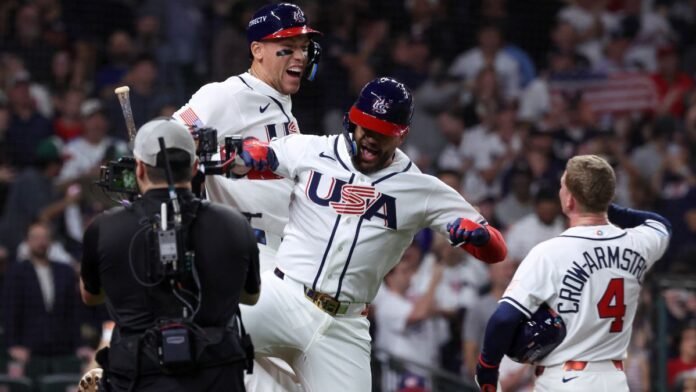
Twenty years after its debut, the World Baseball Classic is back for a sixth attempt at drawing interest to the sport ahead of the MLB season. This year, 78 players from MLB are participating, including all 36 MLB All-Stars from last season. This year in particular is significant because the event literally follows the Winter Olympics for the first time. You would think the sport of baseball would look to capitalize on the massive national success the Winter Games had just under a month ago.
The biggest challenge is where to find the games. Contests are on the FOX family of networks, plus the FOX Sports app and Tubi. Yet the sport’s attempt at its Olympic-style competition has no terrestrial radio broadcasts, again. That means the outlets that navigate the daily conversation about the sport from spring training to the World Series have no access points to deliver the passion of country and help hype the season to come. Again, another swing and a miss by the sport of baseball.
Despite the lack of World Baseball Classic play-by-play on terrestrial sports radio, fans still have a listening option. However, access comes with a subscription fee.
SiriusXM announced last week it will exclusively produce national radio broadcasts for every Team USA game. The company will air 15 World Baseball Classic games in total. Each broadcast will run on the MLB Network Radio channel. Mike Ferrin will handle play-by-play, with Ryan Spillborghs serving as analyst.
So technically, you could say baseball does have a radio broadcast plan for the World Baseball Classic. However, the data shows baseball is missing out on a massive audience by ignoring AM/FM sports radio.
According to Edison’s latest “Sports Audio Report,” released last year, 52% of those surveyed say they often listen to sports content through AM/FM sports radio. That’s more than double the number who said they listen on SiriusXM Radio (24%). Of those surveyed, sports fans said they listened to AM/FM radio 57% of the time compared to SiriusXM at 11%.
And which demographics listen the most to AM/FM sports radio? The same ones baseball continues to rely on. The report shows 58% of those ages 35–54 listen via AM/FM radio, along with 85% of listeners age 55 and older.
If baseball truly cared to generate hype for the start of its season by leveraging the World Baseball Classic as the entry point, the broadcasts should be available on terrestrial sports radio and not limited only to a satellite option.
The World Baseball Classic is not solely a Major League Baseball event. It’s a tournament sanctioned by the World Baseball Softball Confederation in partnership with Major League Baseball and the MLBPA. MLB remains a critical factor in the tournament’s success because the league allows its players to participate.
In 2023, the World Baseball Classic was broadcast in 163 territories through 63 media partners and in 13 different languages. MLB said the tournament generated nearly $100 million in revenue and became one of the sport’s most viewed events.
There’s no denying the Classic continues to grow in viewership, revenue and prestige. Yet MLB once again stops short of taking a fully committed approach to presenting the event through one of the sport’s most powerful megaphones: broadcast radio.
There were several ways baseball could have approached this.
Since the Classic’s television rights belong to FOX, why not carry the Team USA television audio on FOX Sports Radio? The network currently distributes no play-by-play rights to affiliates. A two-week global baseball tournament with live play-by-play would create a compelling programming opportunity. It would also give FOX Sports another national advertising platform for the broadcasts.
It would also make sense considering FOX Sports Radio is already heard on SiriusXM channel 83.
ESPN offers another option. The network once held Spanish-language radio rights to the Classic, but ESPN currently has no involvement with this year’s broadcasts. Did ESPN and MLB miss an opportunity during their latest rights negotiations to include the World Baseball Classic on ESPN Radio affiliates across the country?
ESPN Radio still maintains exclusivity as MLB’s national radio partner even after ESPN gave up Sunday Night Baseball in its most recent television rights deal. ESPN Radio will continue to broadcast Sunday Night Baseball, the World Series, the MLB postseason, the MLB All-Star Game and the Home Run Derby.
And once again, ESPN Radio is also heard on SiriusXM channel 80.
Those are just two examples of options MLB could have explored to showcase the sport’s Olympic-style tournament. By embracing a terrestrial radio partnership alongside its SiriusXM deal, the event could reach a far larger audience.
There’s another benefit as well.
If the Classic aired on terrestrial sports radio stations across the country, those stations would have a stronger incentive to invest promotional resources into the tournament. Local hosts would talk about the games more. Stations would market the broadcasts. The conversation around the event would grow organically.
The irony is baseball already has the product, but it continues to swing and miss on massive opportunities to promote it.
The World Baseball Classic delivers star power, national pride and the type of moments that remind fans why they fell in love with the sport in the first place. What it lacks is the full megaphone of the medium that helped carry baseball’s stories for more than a century.
For a sport constantly searching for ways to grow its audience and reconnect with fans, the World Baseball Classic should be an easy win. It’s global, star-driven and perfectly positioned to build momentum heading into Opening Day.
Instead, by keeping radio coverage behind a satellite paywall, baseball makes the game harder to find. It does not make the event easier to follow. If the sport wants stronger connection, it must be on the stations fans tune into daily.
When the sport limits how fans can hear the games, it limits the conversation that fuels excitement around them.
For a sport built on daily dialogue and generational fandom, leaving AM/FM sports radio on the sidelines turns what should be a grand slam opportunity into yet another swing and a miss.
Then again, that’s just baseball.
Barrett Media produces daily content on the music, news, and sports media industries. Sign up for our newsletters to stay updated and get the latest information right in your inbox.

