
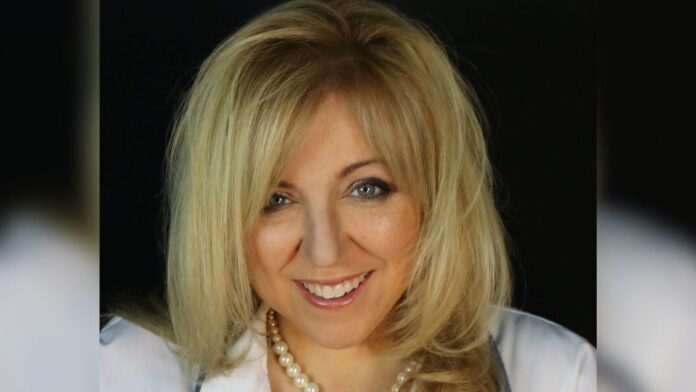
The Doctor is in, and unlike Lucy Van Pelt, Dr. Daliah Wachs’ advice won’t cost you a nickel.
Dr. Wachs’ show, which is syndicated by Talk Media Network, doesn’t just tackle your every-day cough and fever. The longtime practicing physician, teacher, and media aficionado approaches each show with passion and joy, seeing it as a way to help listeners gain a better perspective and encourage people to go physically see the doctor.
She spoke with Barrett Media about how she approaches her show and some of the difficulties doctors face, which patients don’t always see.
KC: Tell me about you. How does a doctor get her own radio show?
DDW: Thanks for asking. So back in 2009, when the recession started, I was doing a lot of community service and a lot of patients were losing their jobs, so they would call up my office and ask me for advice. I have family in radio and many people said, “You’ve got to go on air, you’ve got to go on TV, answer people’s questions.” Well, nobody gives you a show; you had to pay for air time. So I thought this would be a great community service, where I would do a radio show and let people call in, so this way, they’re not taking me away from patients. One hour a week, I can answer everybody’s questions. Well, it was so popular that KDWN in Las Vegas took the show, and they allowed me to expand it.
Then later, I went to XM Radio, and then later iHeart. It just started as a community service, and it took off from there. When I started this, I thought people really just wanted their medical questions answered. But it wasn’t that — they were more concerned about Obamacare, they were more concerned about policy, and what does the doctor think? So my show went from health to news. “What did you think about Aaron Rodgers’ clavicle fracture?” And so it went from giving medical advice to talking about everything.
KC: When you get people who call in and they’re asking you about Obamacare or about Aaron Rodgers, is it difficult as a practicing doctor to answer these questions? Or is there a gray area of being a doctor in the media?
DDW: That’s a fantastic question. What I was very concerned about was somebody taking any advice I give and using it as a medical consult. We have a disclaimer in the beginning, and also, whenever I do answer questions, I always tell people, “Consult your physician, consult your doctor,” but I could give a medical opinion, and it does not necessarily translate to that being what somebody has to do.
But you know, people are always fascinated by what’s happening medically in the news. Why did Robin Williams take his life? How did Parkinson’s play into that? So a lot of it is more the education aspect. If a doctor is educating, there’s definitely a lot more flexibility with what we can do in the media.
KC: Are you still practicing?
DDW: The show got very popular, and patients, unfortunately, wanted to do selfies, and some were actually groping me and things like that. I eventually closed my practice, went to teach, and then did telemedicine. It got to the point — not that I was having an issue on air, but off air — when patients were more, I guess, excited about the celebrity aspect of it. I don’t feel like a celebrity; I’m just a doctor giving medical advice. But there were individuals who were taking it to levels that I didn’t think would allow for a safe doctor-patient relationship. So I closed my in-person practice, went to teach, and now I do my show full-time and do telemedicine.
KC: I’m so sorry you went through that. That’s a lot.
DDW: Yeah, it happens.
KC: You still have such a great and positive attitude. I don’t know many people who would just be like, “Ah, it happens.” That’s incredible.
DDW: Well, I was an ER doc, and you would have people who were drunk or under the influence, or they were coming out of a narcotic episode where, with Narcan, they would grab and punch. Luckily, it’s been less severe as the years have gone by. But unfortunately, doctors get assaulted. I’ve had colleagues shot and stabbed. So I feel like one of the lucky ones that it was never that severe. This is a side of medicine that most people don’t really think about or know about.
KC: Is this something you touch on in your show often?
DDW: Yes, absolutely. We just spoke about the Alexander brothers, and I didn’t necessarily go into assault in medicine, but having been assaulted in the past, you know — what do victims think? Why do some come forward? Why do some not? I can at least give that perspective.
KC: So you wrote a book. Tell me about the book and how it intertwines with what you talk about on the radio.
DDW: As we know, suicide in veterans and with the rising mental health crisis, plagues us now. It’s at epidemic proportions. One of my medical school buddies, one of my good friends, took his life a few weeks ago. When I reached out to the other students, saying he had taken his life and had been struggling with depression, according to his family, so many of my other colleagues said, “Oh yeah, I have depression. I have burnout.” I knew this was common in the medical field, but I didn’t know it was that invasive, even in our own class.
So I wrote a book. I’ve written multiple books on addiction, on dopamine, a Spanish-English dictionary for doctors, things like that. But this one was more personal, in terms of trying to stop suicide and minimize the incidents of it that we’re seeing in medical students and doctors. Apparently, a doctor is taking their life every day. Why? And then what’s happening preceding that? If a physician is that burned out or depressed, then what type of care are they giving? It also affects patients.
I wanted to get to the root of it because doctors don’t really talk to each other. One of the things I aimed to do with my show is to talk about things that people feel uncomfortable discussing, things they think they can’t bring up. I’ll talk about hemorrhoids. I’ll talk about gas. And once people go, “Well, wait a second, Dr. Dahlia talked about her colonoscopy. Dr. Dahlia talked about her prep. Looks like I shouldn’t be so embarrassed.” Then maybe they’ll listen and talk to their doctor about having hemorrhoids or needing a colonoscopy, or their prostate or mammogram issues.
The same thing applies here. A lot of people are like, “Well, I don’t have depression. I’m not suicidal.” But they actually do struggle with it. If you ask, “Are you depressed?” they’ll say no. But I’ll ask, “Do you ever feel like this?” and they’ll say, “Yeah, I feel like this.” It’s all about education and allowing people to think, “Hm, do I need to look a little deeper at this?” It’s also about patient advocacy. Not only am I here for my listeners and for other doctors, I also want to make sure that they are getting the best care.
How do you identify if your medical provider is burned out or if they don’t care? Because I hear from patients all the time: “He won’t even examine me.” “She wouldn’t spend more than two minutes with me.” “She just looked like she hated her job.” Well, then that’s not the best medical provider for you. We’ll talk about it from all different aspects.
KC: Have you ever experienced someone calling into your show saying they want to take their own life?
DDW: I haven’t. Thank God I’ve never had anybody say that they wanted to take their own life. I did have somebody who was a cab driver who said, “Doc, love your show. I got some chest pain, but I’ve got another three hours to my shift.” And I said, “No, no, no, no, no. You stop your shift. You get your ass to the hospital right now.”
So I’ve had that happen. But if somebody did call in like that, I would commend them and make them feel safe — tell them how good it was that they called, that they’re not alone, that many of us have felt that way. I would let them kind of work through it. Then I would tell them to call the crisis hotline. If I could, I would also probably have my producer get any information they can so we could get some help to their address. But luckily, that hasn’t happened yet.
KC: What are some of the other things that doctors face on a regular basis that most people don’t know about?
DDW: I think doctors are really shocked at where medicine is going and how AI is going to replace a lot of their jobs. Much of the narcissism, complacency, and confidence that doctors had is gone. They weren’t prepared to spend hundreds of thousands of dollars in student loans and lose their youth dedicating themselves with years of education to an industry where they could be unemployed as well.
Many doctors lost their practices because people’s deductibles skyrocketed. I think a lot of people don’t realize that even though we doctors dedicate our lives to patients — working for free, sacrificing our health, getting needle sticks, being exposed to pneumonia, flu, tuberculosis, and all that — doctors have families and people to take care of in addition to patients. Many of them do have to be business-minded. It’s a big transformation that patients and doctors are seeing, and it’s going to be a little bit of a rocky road, especially with AI coming in.
KC: So on the topic of AI, it’s a two-part question. Where do you see it going in the medical field, and do you use it in your show?
DDW: I’ll answer the second question first. I haven’t used AI in my show yet. The one thing that has really characterized my show is genuineness and authenticity. When I make a joke or say something, it’s me. So I haven’t been using AI in media, although I do use it to make sure I am as grammatically correct as possible.
As it pertains to AI in medicine, telemedicine has really transformed things — good and bad. Good in terms of people being able to access a doctor when they otherwise couldn’t. I’m licensed in multiple states, including Alabama and Mississippi. Hearing patients so grateful that they could talk to a doctor when their nearest hospital or medical center is 30 miles away is a blessing.
On the other end, it has trained patients for AI, because now many telemedicine companies allow you to just type into a computer and you’ll hear from a doctor at a later time and get your prescription. Many of these companies are already using AI for diagnosis. It’s only a matter of time, given patient demand — patients who want what they want and don’t want to deal with a human. We are going to see a lot of primary care using AI, and unfortunately, displacing medical providers.
KC: Is that dangerous in health care? Don’t you physically have to see someone to diagnose certain things?
DDW: Yes, we are seeing a lot of things missed. The argument that public health experts are making is that the patient who wouldn’t have called a doctor is now talking to one — that AI has the ability to save lives, which is right. The access is incredible.
On the other end, when somebody calls me saying they have acid reflux, how do I know they’re not having a heart attack? How do I know they don’t have a melanoma growing on their back? Interestingly, last year a study came out saying stage three cervical cancer is on the rise. Why would that be when we have HPV vaccines and pap smears? Because people aren’t going in for their pap smear anymore. They used to come in just to get their birth control, and we would catch HPV and cervical cancer very early. Now that people aren’t coming in, by the time they are having issues, it’s at a higher stage. Same thing with colorectal cancer.
Where I see AI missing out is in cases like: “I have a cough, and I’m wheezing, so it’s asthma.” But what if that’s a cardiac issue? I could tell you millions of stories where a patient thought they had something, and it ended up being something else.
AI is really driven by what the patient tells it. For example, I had a patient who walked in as a new patient, saying, “I need to refill my inhaler.” But because I was thorough, I said, “Good, we’ll refill your inhaler, but let me check your asthma first.” And I thought, I don’t think she has asthma. So I asked, “Why do you think you have asthma?” She said, “Well, I have asthma.” I said, “Use a different term.” She said, “Well, I have trouble breathing.”
Now I’m looking at a young woman who has difficulty breathing. Could it be asthma? Could it be her lungs? Or could it be her heart? It turned out that I didn’t like the way her heart looked on the chest X-ray. So I sent her to a cardiologist, and he called me and said she had a tumor on her heart. He asked, “What made you think of that? How did you find this?” I said, “Because she said she had asthma, and I don’t think she ever had asthma. I think the doctors were lazy and just said she had asthma because she had trouble breathing.” And he confirmed — she doesn’t have asthma.
So the big concern with AI is if a patient says, “I have asthma and can’t breathe, give me my inhaler so I can go on with the rest of my day,” something like that could be missed. We always have our checklist, and that’s what I’m concerned about.
Barrett Media produces daily content on the music, news, and sports media industries. Sign up for our newsletters to stay updated and get the latest information right in your inbox.

