
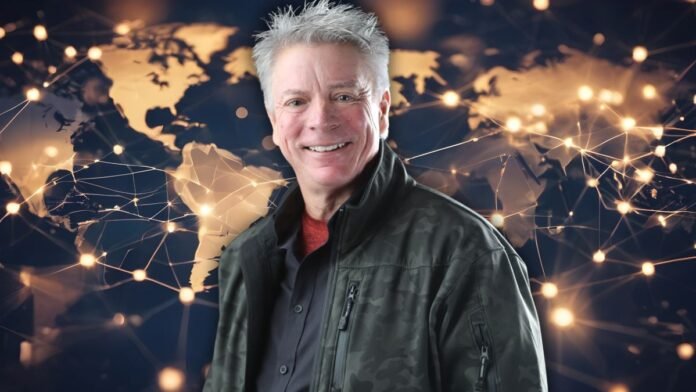
Radio has always been a breeding ground for reinvention. There are many stories to be told about those who took what they learned during years in radio and ran in a different direction. Occasionally, leaders build their reputations with major groups. While others move beyond our industry as opportunities shift.
As a few examples, Country radio programmer Erik (Logan) Toppenberg plied his strategic skills from radio to Oprah Winfrey’s OWN cable TV network. This was before becoming Chief Executive Officer of the World Surfing League. Now, Erik serves as Chief Advisor to motivational guru Tony Robbins.
Rock programming savant Tim Sabean went from being a nationally revered music magician to running The Howard Stern Channels for SiriusXM. Tim is now a radio group owner, partner, and marketing strategist for an evolving beef processing firm.
Others take their instincts and skills global. Which brings us to versatile national programmer Brian Thomas. He has been out of the radio spotlight — at least our spotlight — for half a decade. During that time, he has truly gone global. Halfway around the world — global.
Brian Thomas has been a friend and colleague for five decades. He built his reputation in his home state of Michigan, eventually developing an impressive nationwide resume. Over the course of his career, Brian worked in seven of the nation’s top ten markets and served as Program Director for heritage brands across several formats.
In classic and adult hits, he strategically rebranded the JACK-FM experiment in New York, only to relaunch the legendary WCBS-FM back to prominence. His gold-based success also included winning in Chicago with WLS-FM and in San Francisco at KFRC.
His country programming leadership included major brands like NASH-FM in New York, Young Country in San Francisco, and Atlanta’s WKHX. Meanwhile, his hot AC talents programmed Fresh 102.7 in New York City, San Francisco’s KIOI, and numerous MIX stations nationwide.
That market-level success led to a series of national corporate roles at four major radio companies.
At CBS Radio, Thomas rose to Vice President of Classic Hits Programming. He later served as VP of Classic Hits Programming and Corporate Program Director for Country at Cumulus Media. That was followed up by National Brand Manager of Classic Hits Programming at Entercom.
Thomas also held the role of National Brand Manager of Classic Hits/Adult Hits at Townsquare Media before returning to Michigan as Operations Manager for the company’s Grand Rapids cluster.
That’s where Thomas somewhat “vanished” from our radar — taking his talents to Taipei, Taiwan, for a few years before returning to the states last week.
Along the way, he also dipped his toes into other ventures. We rang Thomas up not only to catch up but also to hear about his global experience overseas.
*Editor’s Note: Answers have been edited for clarity and length.*
Kevin Robinson – After having success in corporate roles at your last four companies, along with local PD positions, you found yourself outside that environment for a time. That’s something many people experience. What went through your mind in those first months and how did you decide your next chapter?
Brian Thomas – Your timing is perfect. We just moved back to the United States from Taiwan.
I was part of a second-year COVID layoff, but I was asked to stay on as a format consultant. In that role I continued doing the daily music sheets for our stations and syndication. I also developed a morning show that eventually launched in about a dozen of our markets.
The funny thing was I was just as busy and working just as hard. The only real difference was the paycheck.
As for the next chapter, I thought, why not try something new? I spent a couple of years as Managing Partner with singer/songwriter Anthony L. Smith, working in artist management. That included social media integration, A&R, songwriting, and radio promotion while working with four artists in Nashville.
I’m proud that one of our artists performed at CMA Fest two years in a row. But I quickly learned that in the first year of artist management, you often spend a lot more money than you make. Once I moved to Taiwan, the time difference made it difficult to continue in that role.
Robinson – You took your experience overseas with radio in Taiwan. How was that opportunity present to you, and what were the biggest differences between American radio and what you ran into there?
Thomas – My wife was a director at Amazon and was offered to become CEO of a similar American startup in Taiwan. That was a 2 year game plan.
I sent my resume to ICRT, the International Community Radio Taipei/Taiwan which is on the former Armed Forces Radio Network. It reaches Taiwan’s 23 million people on 5 signals, and the only one in English.
After seeing my resume, the GM and PD said they needed to create a role for me. They loved my country experience and we brought new country [music] to a new country. It had been a decade since country music was featured on the radio in Taiwan.
Some big differences between American Radio and radio there?
It’s an “under-radioed” market. There are five big stations where we all have double digit ratings.
Another big difference is the amount of people who all use mass transit and don’t drive to work. That being said, there is still a lot of bumper to bumper traffic there.
Another difference is the workday. People get to work after 9am, go to lunch by 11 and are heading home by 6pm. Local restaurants close between 2pm and 5pm, because the cooks can only work so many hours in a row.
Robinson – As a programmer and air talent, what surprised you — or didn’t surprise you — about the audience and media consumption habits in Taiwan compared with the U.S.?
Thomas – The biggest surprise happened at my very first station event.
So many people came up to tell me they loved the country music because it was easier for them to understand the English lyrics. Later, a research project confirmed something fascinating. The number three reason people listen to ICRT is to help learn English.
Once I understood that, I realized I sometimes had to add context.
For example, if I’m playing Chevy Silverado by Bailey Zimmerman. I might need to explain that it’s a large pickup truck made by Chevrolet, and that in Taiwan it could cost up to three million new Taiwan dollars.
Another surprise was being recognized me in public. A big reason why is that we simulcast on Twitch. Listeners can actually see me in the studio, and during the show I can interact with them off-air in real time.
I recommend that kind of visual connection for any station that can do it.
Robinson – What skills or perspectives have you developed that you might not have gained had you stayed strictly in the corporate radio environment?
Thomas – The key to longevity in this business is constantly reinventing yourself and learning new skills. I learned a lot through artist management. Especially about the music industry from the artist side.
Moving to a new country also pushed me to grow personally. I took Mandarin lessons for more than a year, and getting back on the air again has been incredibly fun. Experiencing radio in another culture really broadens your perspective on how audiences connect with content.
Robinson – You’re far from the only talented programmer who has faced downsizing. What did that experience teach you about staying relevant in the business?
Thomas – I never imagined my radio career would take me to the other side of the world. In fact, my career in radio has taken me about one and a half times around the world — 36,503 miles.
The lesson is simple. If you’re not learning something new every day, those kinds of opportunities probably won’t come your way. Staying curious and adaptable is what keeps you relevant.
Robinson – Recalling about everything you’ve accomplished since leaving traditional American radio. What lessons would you pass along to emerging programmers, air talent, and audio creators?
Thomas – I’ll actually be releasing an article called What Can You Learn from Radio in Taiwan?. However, here are a few highlights.
At ICRT — International Community Radio Taipei — the letters in our name say a lot about how we operate. The “I” stands for International. We’re the only English-language station in Taiwan. Our staff reflects a mix of English-speaking cultures: the U.S., Britain, Scotland, Ireland, and Australia.
That raises an important question for any station. Does your staff look like your market? If your market is 45% Hispanic, for example, does your team reflect that?
If not, it’s harder to truly relate to your audience.
The “C” can stand for several things. First, coverage. People can’t listen if they can’t hear you. Our five transmitters cover the entire island and its 23+ million residents.
Second, community. We still do remotes and broadcast live from events. This month we’re broadcasting live for two weeks from the Lantern Festival.
Third, companionship. We’re encouraged to talk about our lives in Taiwan and our experiences back in the U.S. I’ve also enjoyed sharing stories from traveling all around Asia. Being simulcast on Twitch helps listeners feel like they really know you. That connection is something radio should never lose.
Brian operates BT Radio Waves, LLC — a media consulting company. Reach him here.
What binds all of our careers is a mindset that should go beyond a job title. What we have all become is an amalgamation of skill sets. Last week, we touched on psychologist Carol Dweck and her concept of always being present with a growth mindset. Brian serves as a living example of just that.
Reinvention in our business is far from a detour. Instead, we should treat reinvention as part of our ongoing professional growth. Every new chapter feeds into the next one, charting our career story.
Barrett Media produces daily content on the music, news, and sports media industries. Sign up for our newsletters to stay updated and get the latest information right in your inbox.

